
Virtual Staging vs Real Home Staging: Which Is Better for Selling a Home?
When preparing a home for sale, presentation matters. Today, sellers and real estate professionals have more options than ever, including both virtual staging and traditional physical home staging. Virtual staging can transform listing photos quickly and affordably. Real home staging, on the other hand, changes the actual space buyers experience when they walk through the door.
So which option is better?
Let’s start with the bottom line: from a realtor’s perspective, if keeping costs down is the priority and the property is in a lower price range, virtual staging may be more than sufficient.
However, if you are selling a high-value property and want to feel confident bringing buyers through the home at any time—while also increasing the likelihood of a successful sale—then real home staging can be considered an essential investment. This conclusion is supported by both real-world experience and industry data.
If you’re a developer, there’s even less to debate—you probably already know the answer.
What Is Virtual Staging?
Virtual staging uses digital technology to add furniture, artwork, rugs, lighting and décor to photographs of an empty or sparsely furnished property. Instead of physically bringing furniture into the home, designers create a digitally furnished version of the room for use in online listings, social media and other marketing materials.
For sellers who primarily want to improve the appearance of listing photos, virtual staging can be an efficient option. It is fast, flexible and generally costs less than physically staging an entire property. It can be especially useful for investment properties, pre-construction projects, rental listings or homes where physical staging is not practical.
However, virtual staging changes the photograph — not the property itself.

What Is Real Home Staging?
Real home staging, also known as physical or traditional home staging, involves bringing actual furniture, artwork, lighting and accessories into a property before it is photographed and shown to buyers. Professional staging is not simply about making a room look attractive.
A staging team considers furniture scale, traffic flow, focal points, room function, colour balance and the type of buyer the property is likely to attract. The goal is to help buyers immediately understand how a space can be used and how it might feel to live there. This is particularly important for vacant homes, where empty rooms can sometimes feel smaller, colder or more difficult to understand.

Virtual Staging vs. Real Home Staging: The Key Difference
The biggest difference between virtual staging and physical staging is simple:
Virtual staging improves how a property looks online. Real staging improves how the property looks and feels both online and in person.
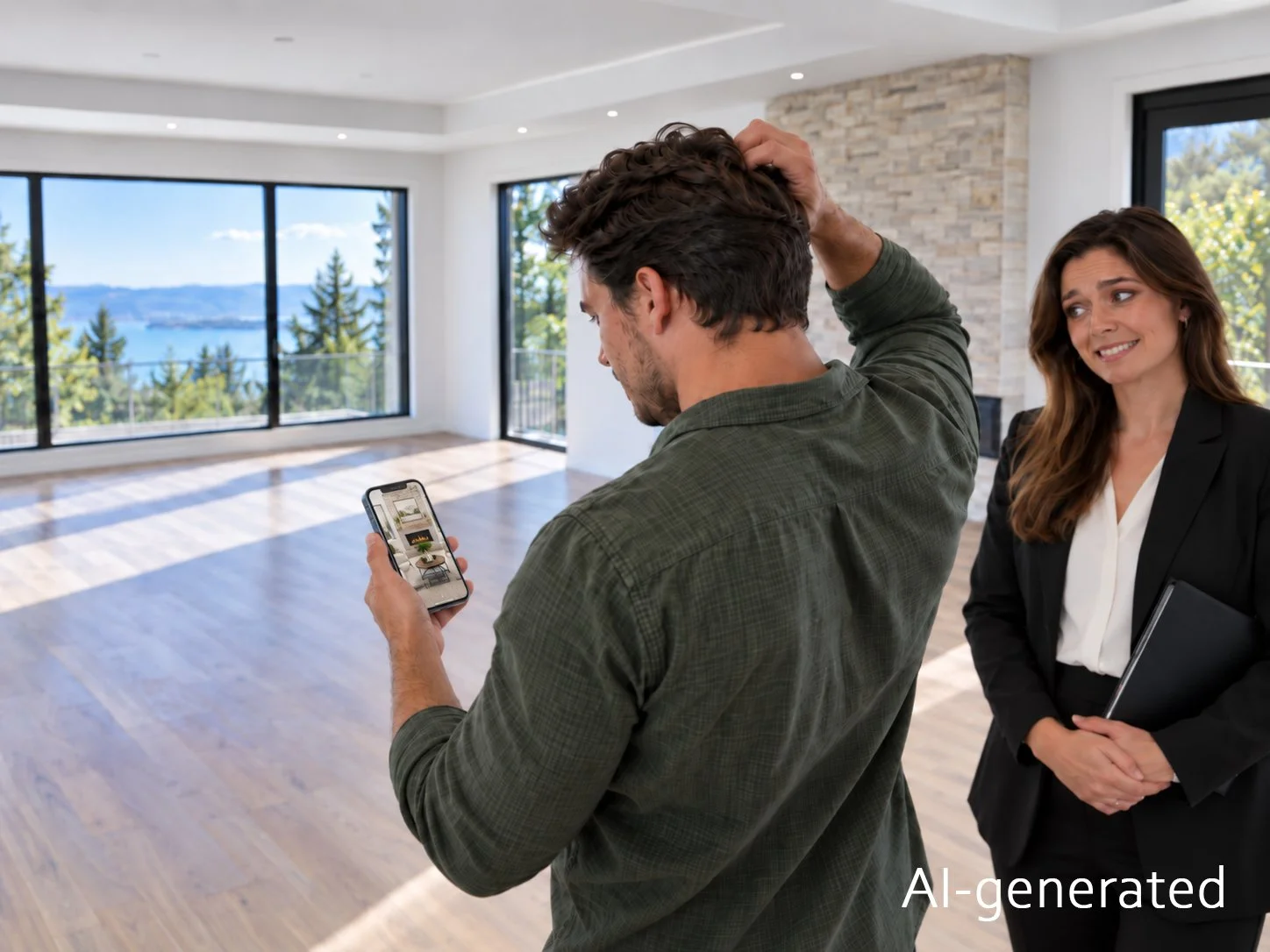
A virtually staged living room can look beautiful in an MLS listing. But when buyers arrive for a showing, they may still walk into an empty room. With physical staging, the furniture and décor buyers see in the photographs are also part of the experience when they visit the property. That consistency can make the transition from online browsing to an in-person showing feel much more natural.
A Buyer Does Not Purchase the Listing Photo
Most buyers begin their home search online. They scroll through listings, compare properties and decide which homes deserve an in-person visit. This is where virtual staging can be very effective. A well-staged digital image can help an empty room feel warmer and easier to understand. But the buying process does not end with the photograph. Eventually, the buyer walks through the front door. At that point, the experience of the actual property becomes more important than the image that attracted the original click.
Virtual staging may help earn the click. Real home staging helps carry that impression through the showing.
Real Staging Helps Buyers Understand Scale
One of the biggest challenges with an empty home is understanding scale. An empty bedroom may appear large in photographs, but buyers may still wonder whether a king-size bed will fit comfortably. An open dining area may look spacious, but without furniture it can be difficult to visualize the size of dining table the room can actually accommodate. Properly selected furniture gives buyers an immediate visual reference. A sofa establishes the scale of a living room. A dining table demonstrates circulation space. A bed helps buyers understand the proportions of a bedroom. Professional staging is therefore not simply decoration. It is also a visual communication tool.
Online Impression vs. In-Person Experience
Virtual staging is designed primarily for the screen. Physical staging works both on the screen and inside the home.
That distinction becomes especially important during private showings and open houses. When buyers walk through a professionally staged property, they can experience how the rooms connect, where furniture naturally belongs and how the overall layout functions. They can move through the space and understand its proportions in a way that a photograph cannot fully communicate. For many buyers, this experience helps turn an empty property into something that feels more like a potential home.

Is Virtual Staging Cheaper?
Yes.
Virtual staging is generally much less expensive than furnishing an entire property with real furniture and accessories. If the only goal is to improve listing photography at the lowest possible cost, virtual staging may be the right solution. But cost and value are not always the same question.
Physical staging requires transportation, furniture inventory, installation, styling and removal. That makes it a larger investment. In return, however, the staging continues to work after the buyer closes the listing page. It becomes part of every showing, every open house and every in-person impression of the property.
When Does Virtual Staging Make Sense?
Virtual staging can be a practical option when the property is difficult to stage physically, when the marketing timeline is extremely short, when the budget is limited or when the primary objective is simply to create stronger online images. For certain rental properties, investment listings or pre-construction projects, this may be exactly what is needed. It is not necessarily a question of whether virtual staging is good or bad.
It is a question of what job you need the staging to perform.
When Is Real Home Staging the Better Choice?
Physical home staging becomes especially valuable when the property itself needs to make a strong impression during showings. Vacant homes are a good example.
Without furniture, buyers may focus more heavily on imperfections, struggle to understand room proportions or have difficulty imagining how the home could function. Professional staging gives each important room a clear purpose and creates visual focal points that guide buyers through the property. It can also be particularly valuable for new builds, luxury listings, open-concept homes and properties where the seller wants the marketing photography and the actual showing experience to feel consistent.
Virtual Staging Sells the Image. Real Staging Sells the Experience.
Both virtual staging and physical staging can improve the presentation of a property. The difference is where that presentation ends. Virtual staging can create an attractive first impression online. Real staging continues that impression when buyers arrive. And while buyers may discover a property through a photograph, their decision is ultimately influenced by how they feel when they are standing inside the home.
Professional Home Staging in Calgary and Edmonton
Every property requires a different strategy.
In some situations, virtual staging may provide everything a seller needs. In others, physically staging the property can significantly improve how buyers understand and experience the space. At Dezin Group, we specialize in professional vacant home staging in Calgary, creating interiors that are designed to photograph beautifully and make an equally strong impression during in-person showings. If you are preparing a vacant property for sale in Calgary or Edmonton, our staging team can help determine the right presentation strategy for your home.
Planning to list a vacant property? Contact Dezin Group to learn more about professional home staging in Calgary and Edmonton.
Frequently Asked Questions
Is virtual staging the same as real home staging?
No. Virtual staging digitally adds furniture and décor to photographs, while physical home staging places real furniture and accessories inside the property.
Is virtual staging cheaper than real home staging?
Yes. Virtual staging is usually less expensive because it does not require furniture rental, delivery, installation or removal.
Does virtual staging help sell a house?
Virtual staging can improve listing photographs and help buyers visualize an empty room. However, it does not change what buyers experience when they visit the property in person.
Is home staging worth it for a vacant home?
Vacant homes can be difficult for buyers to visualize. Professional staging can help communicate room scale, function and layout while creating a stronger overall presentation.
Should I choose virtual staging or physical staging?
If your main goal is improving online photographs at the lowest possible cost, virtual staging may be sufficient.
If the property will have regular showings and you want buyers to experience the same impression they saw online, physical staging must be the stronger option.
Do you provide home staging in Calgary and Edmonton?
Yes. Dezin Group provides professional vacant home staging services for residential properties in Calgary, Edmonton and surrounding areas.